The Silent Threat: What is Planned Obsolescence in Fashion Tech?
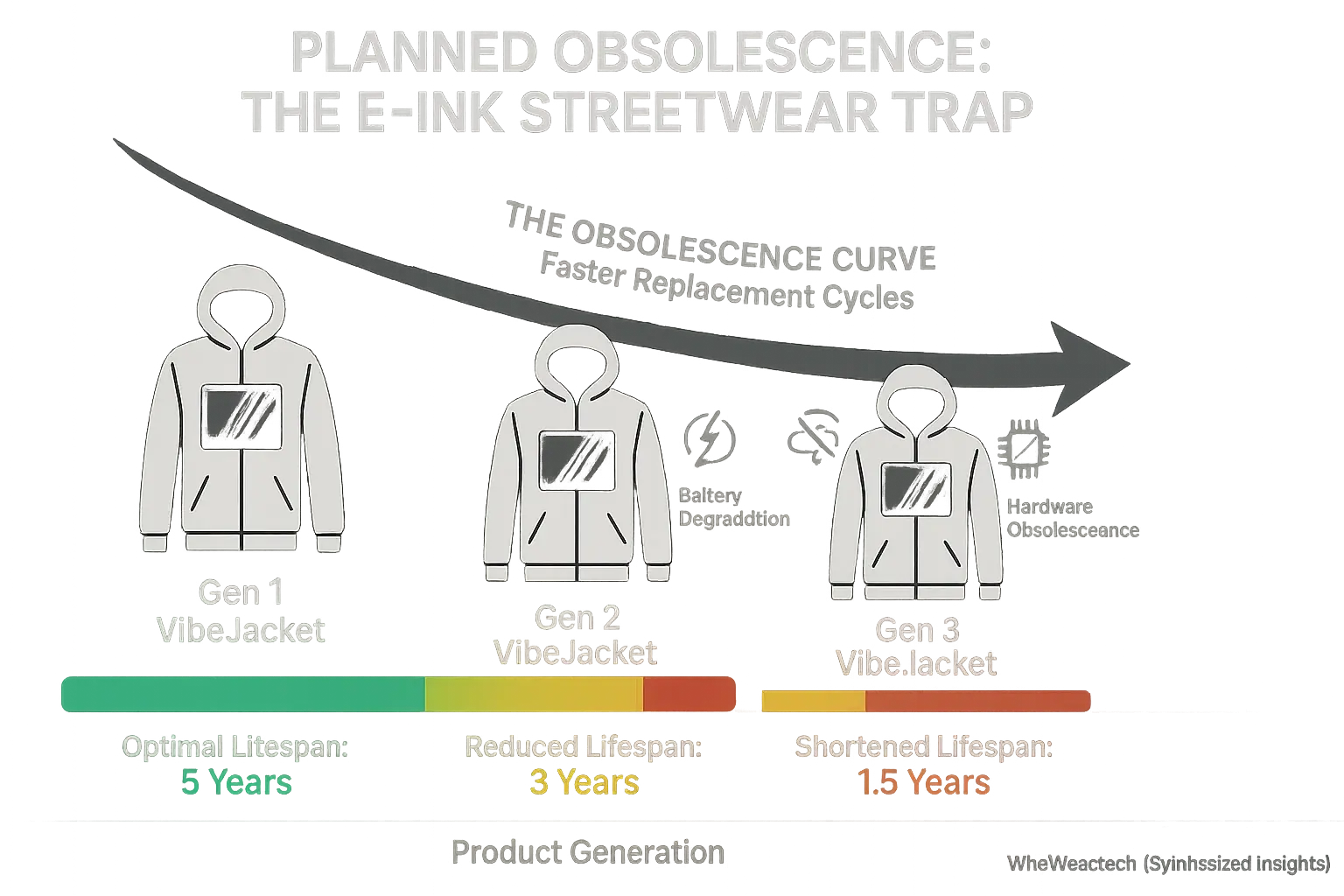
Gadgets die. Too soon. This frustration feels deeply familiar. A hidden industry practice operates: planned obsolescence. This term describes products with intentionally limited lifespans. Companies engineer early failure, pushing faster replacement cycles.
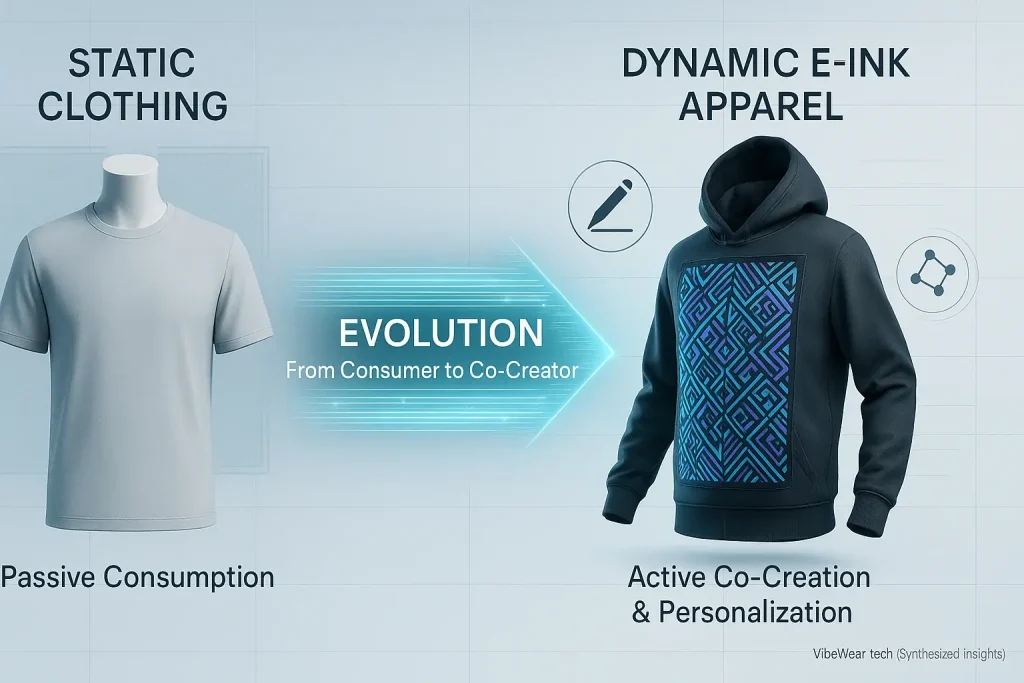
So, what about VibeWear technology? Could our mood-adaptive clothing face this obsolescence trap? This is a vital, unspoken truth for new e-ink fashion. Integrating rapidly evolving technology into garments risks a fast fashion tech trap. VibeWear's analysis highlights this vulnerability for our emerging field.
This obsolescence threat has clear points of failure. Software updates could make older VibeWear pieces incompatible. Battery degradation inevitably shortens a garment's active lifespan. The constant push for new hardware features fuels this cycle. VibeWear advocates proactive design. Consumer vigilance matters greatly.
The Software Time Bomb: When Your VibeWear Gets 'Too Old' for Updates
Imagine your VibeWear hoodie. Still looks great. Suddenly, it cannot connect to the latest app features. Or worse. It stops displaying patterns correctly. The software is simply too old. Software upgradability issues can silently end your VibeWear's useful life. This functional obsolescence is a real threat, even if the e-ink panels and fabric remain pristine.
Manufacturers often cease software support for older VibeWear models. This decision renders perfectly good techwear functionally useless. Your garment might still be physically intact. Yet, it loses its dynamic capabilities. App compatibility vanishes. This is not always about hardware failure. It can be a deliberate strategy to encourage upgrades, impacting your VibeWear's software support lifespan.
Many users of early smart wearables learned this lesson. A device might physically endure for years. Without crucial security patches, it becomes a risk. Without app compatibility updates, it becomes a stylish, digital brick. VibeWear, as an industry, must prioritize long-term software support. Exploring open-source approaches could also significantly extend VibeWear longevity and user trust.
The Draining Reality: Battery Degradation & Replacement Hurdles
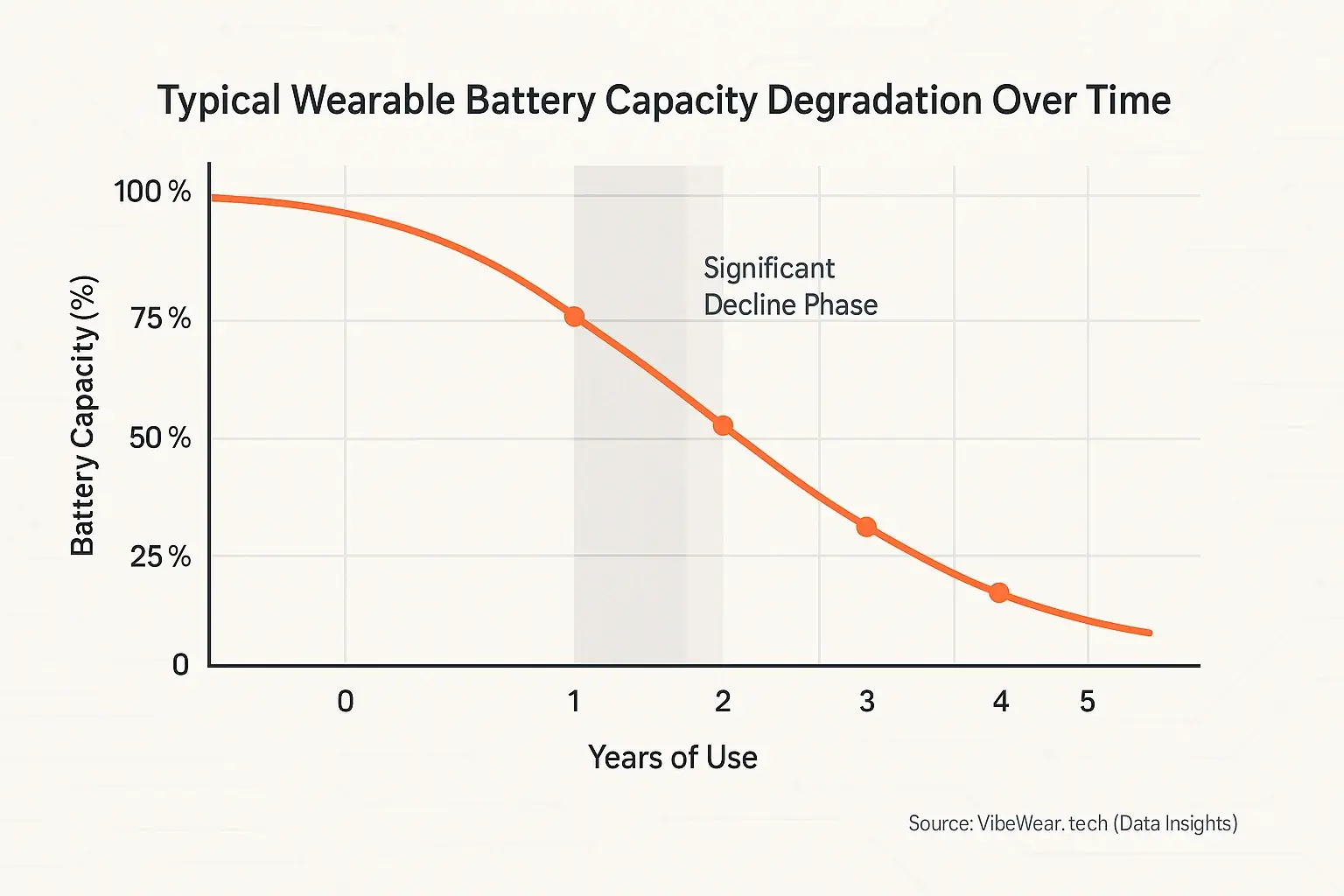
Remember that phone battery? Used to last all day. Now, it barely makes lunch. Wearable tech faces this same ticking clock. Batteries inherently degrade over time. VibeWear's data synthesis shows typical wearable batteries offer peak performance for about two to three years before significant decline. For your VibeWear, this means less 'vibe time' as power capacity inevitably fades.
The difficult truth? Many garments seal batteries deep inside. This design makes replacement incredibly hard, often requiring specialized service. Sometimes, professional replacement costs can approach the garment's original purchase price. Users then discard functional VibeWear items prematurely. A whole garment, trashed for one failing part. This directly contributes to a growing mountain of electronic waste.
VibeWear champions a different path forward. Designers must prioritize easily swappable battery modules. This is crucial. Such a shift supports true garment longevity. It directly tackles e-waste. This is not merely about convenience; it is about genuine sustainability. Clear battery health indicators would also empower users, showing when a simple swap is needed. Sustainable fashion demands this foresight, don't you think?
The Upgrade Treadmill: Constant Pressure for New VibeWear Models
You just bought the latest E-Ink hoodie. Suddenly, a 'Pro' version with a slightly brighter display is announced. Sound familiar? Rapid technological advancements power this cycle. Aggressive marketing then creates an insistent 'upgrade treadmill' for VibeWear. Consumers often feel this immense pressure. New hardware models appear constantly, pushing older, perfectly functional tech aside.
Here is an unspoken truth. Existing VibeWear technology frequently meets all practical user needs. Marketing, however, skillfully cultivates dissatisfaction. It pushes users to feel their current garment is 'outdated'. Or somehow 'inferior'. This feeling rarely stems from true functional deficiency; it is about strategically manufactured desire. VibeWear's analysis indicates even minor feature improvements can spark perceived obsolescence, driving many premature replacements.
For VibeWear to truly thrive long-term, a fundamental shift must occur. The industry focus needs to move. It must pivot from constant, incremental hardware updates. Meaningful innovation in user experience should be prioritized. Sustainable design principles are equally critical. VibeWear believes brands must actively resist the relentless pressure of annual hardware cycles. Real advancement serves the user, not just the sales quarter. This Upgrade Treadmill benefits few. Thoughtful consumption is the alternative.
Designing for Forever: The Path to Longevity in Mood-Adaptive Fashion
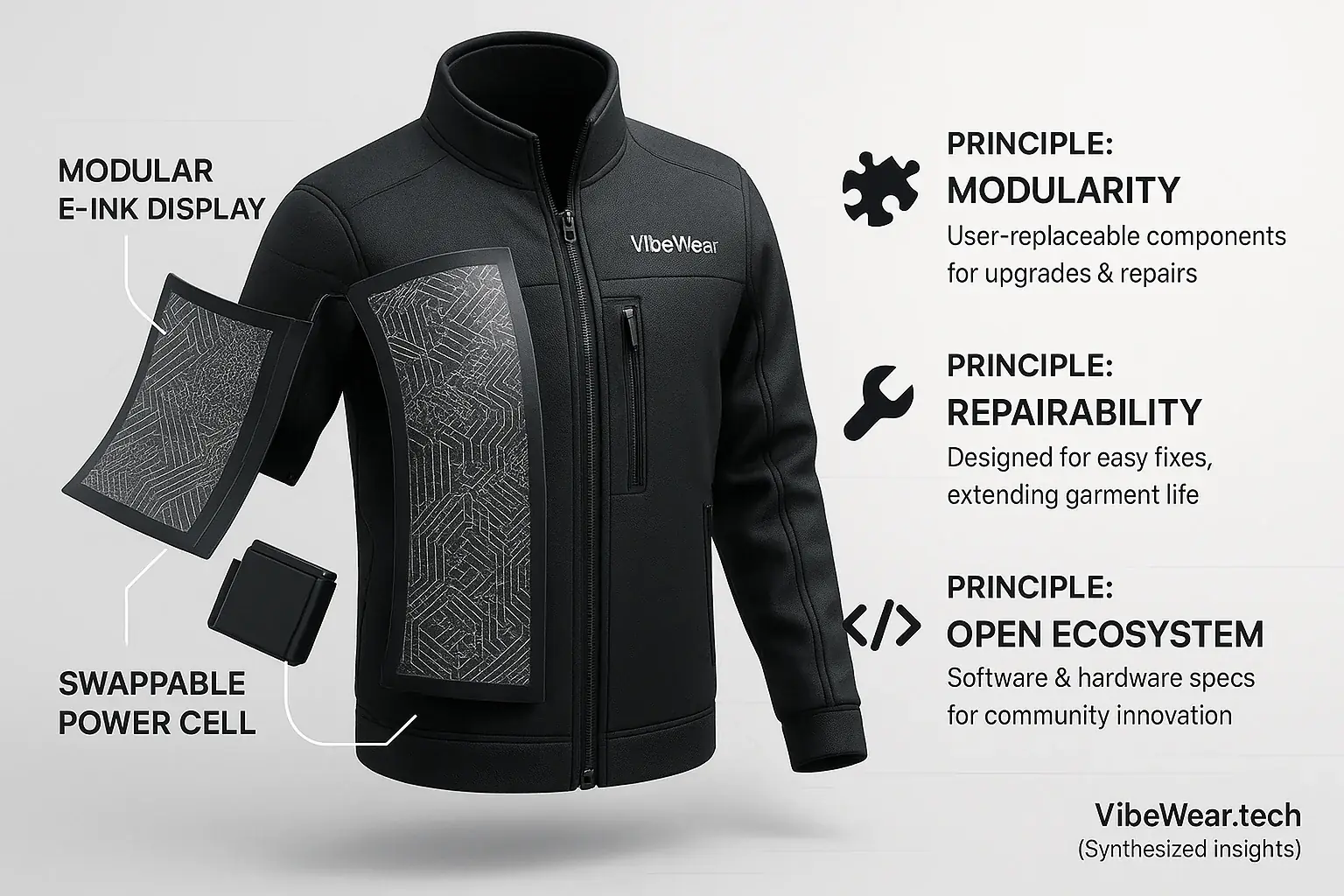
So, how do we escape this tech fashion trap? The answer is design. Conscious design builds VibeWear that lasts. It is not just for a fleeting season. This core idea is designing for longevity.
Designing for longevity rests on key principles. Modular components are vital. Imagine easily swapping a battery. Or upgrading an E-Ink panel. Yourself. Open-source software offers another powerful path. The community can extend a garment's useful life. This happens well beyond any official support cycle. Robust construction creates durable items. Repairability must become standard. Not an afterthought.
As users, we also shape this future. Demand transparency from VibeWear brands. Ask about their commitment to long-term support. Look for products showcasing modular designs. Seek out accessible repair guides. This collective action pushes the entire industry toward truly sustainable innovation. It builds a better tomorrow for expressive apparel.